
Simon has created many videos for You Tube over the years. View a selection of the most popular here.

Below you'll find a list of all posts that have been categorized as “Simon Borg-Olivier”
Simon has created many videos for You Tube over the years. View a selection of the most popular here.

In traditional yoga teaching you could only progress to a more advanced posture after you had satisfactorily demonstrated to your teacher that you could do the postures that have come before it. This guarantees that the new more advanced posture can be performed safely. To be adequately prepared for the Headstand (Sirsasana) you have to have first mastered the ‘Shoulderstand posture’ (Salamba …
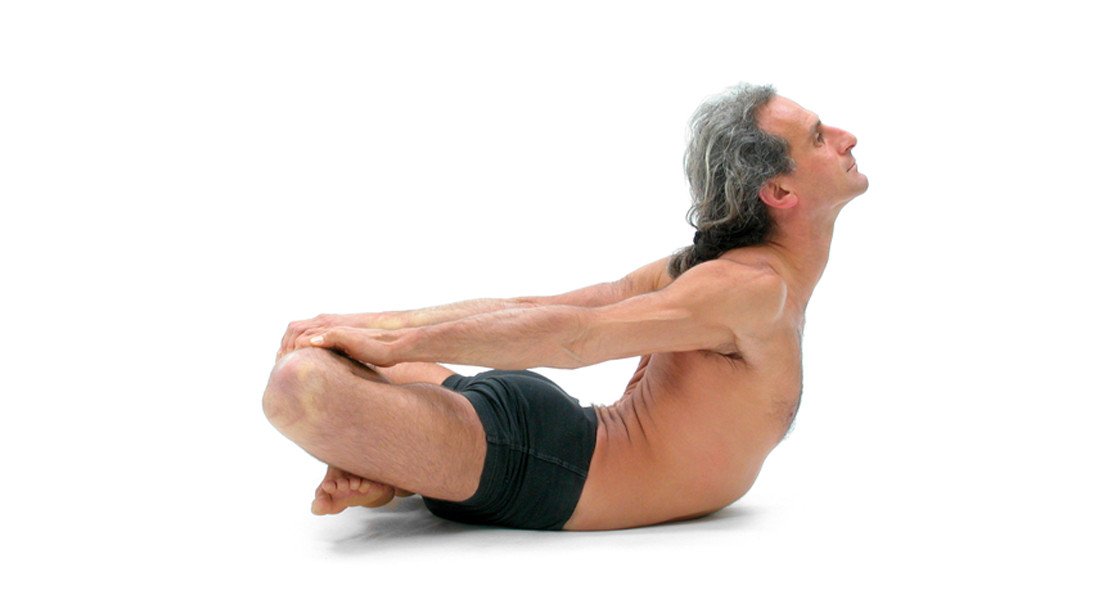
Here is a re-post of one of Simon’s popular blog posts about relieving back pain. Most modern adults tend to have very stiff middle backs (usually from about the tenth thoracic vertebra (T10) to the fourth lumbar vertebra (L4). This region (T10-L4) is stuck in a slight forward bend (spinal flexion) in many modern adults. These people usually do most …

One of Simon’s popular active lectures on the essence of vinyasa yoga. Learn some of the missing steps you might be forgetting in the Up Dog Down Dog Vinyasa.

by Simon Borg-Olivier Active movements are the more traditional way to come into hatha yoga postures. These are movements that are done by the muscles that would be used to enter a posture without the assistance of external forces such as gravity, momentum, or one limb pulling on another limb. These movements can give you most of the purported benefits …

By Simon Borg-Olivier MSc BAppSc (Physiotherapy) Most people in the world of modern yoga are not actually doing yoga while they are engaged in the activities of posture, movement, and breathing, but instead, they are doing exercise or having a workout, which is often painful, or at least uncomfortable, and after which they are often tired, and hungry. This is …

This blog is based on a video interview I did with my dear friend and film maker Erick Joseph at the Bali Spirit Festival last year. You can also read the article i wrote about it recently. “There are certain things we should all be doing before, during and after our yoga practice on a physical (anatomical), energetic (physiological) and emotional level. …

Are your muscles not working as well as they used to? Are you getting unexplained pain or altered sensations in your arms or your legs? You may be able to get some improvement in your condition by mobilising your nerve tissue, which is also known as nerve tensioning, or neural mobilisation and often –although incorrectly – as ‘nerve stretching’. Nerve …

In these two short videos physiotherapist and Yoga Synergy Director Simon Borg-Olivier explains how to practice traditional yoga if you have a body that does not have natural features inherent in the bodies of traditional cultures, such as the ability to squat and sit cross legged on the floor. Differences between the traditional body and the modern Western body are …

Safely Doing Simple to Complex Backward-bending Postures and Movements: ‘THE ADVANCED CAMEL TRAIN’: In this 3 minute video I demonstrate and describe what you need to be aware of to safely come into postures such as the ‘Camel posture’ (Ustrasana) and related postures such as Laghu vajrasasana, Bhekasana and Kapotasana. I call this advanced sequence ‘The Camel Train’. It is …